
 CONFERENCE
Design & copyAgnes Aasmaa
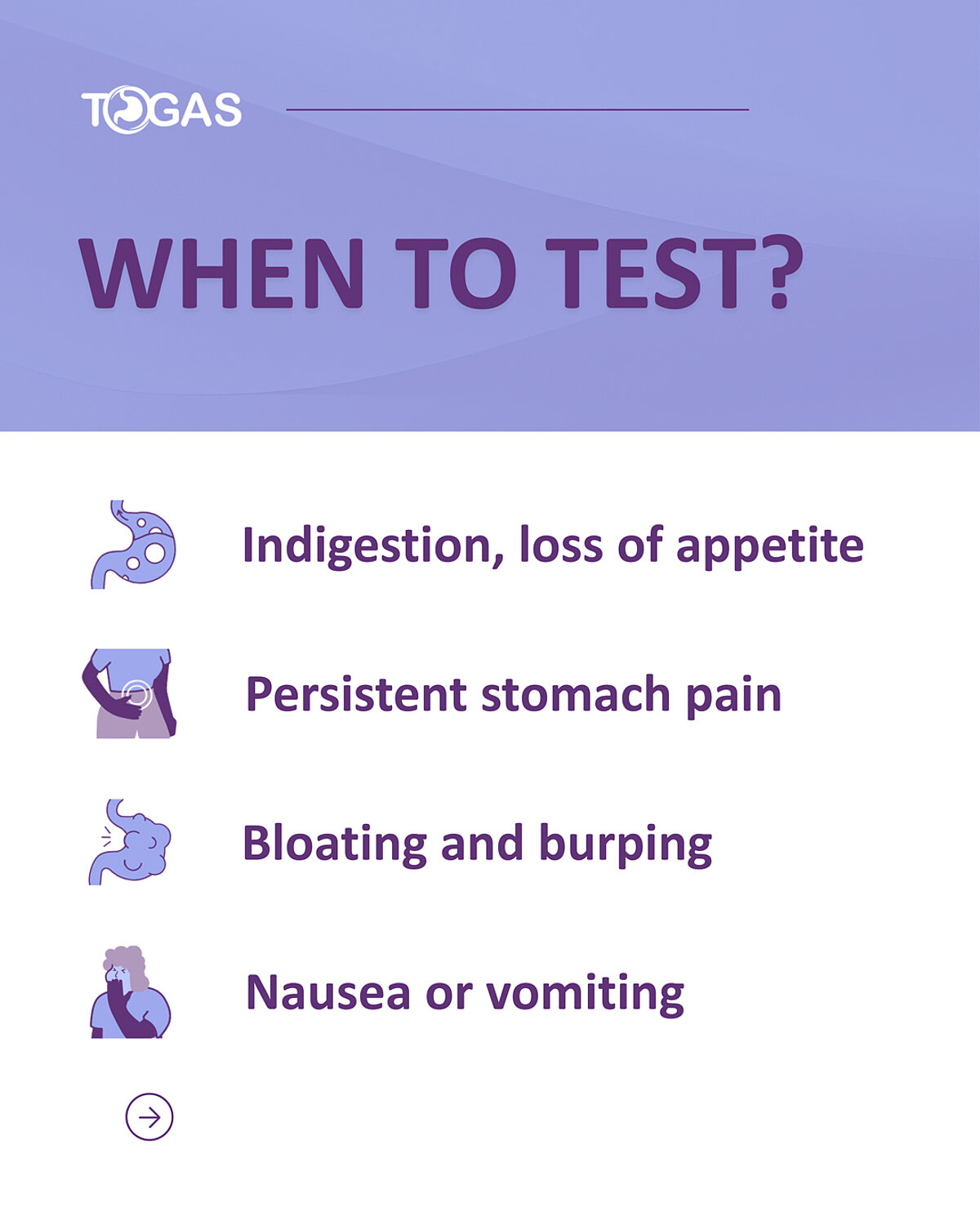
When should you get tested?
If you're experiencing persistent stomach pain, bloating and burping, nausea or vomiting, or indigestion with loss of appetite, it's time to talk to your doctor about H. pylori testing.
Three non-invasive testing options are available:
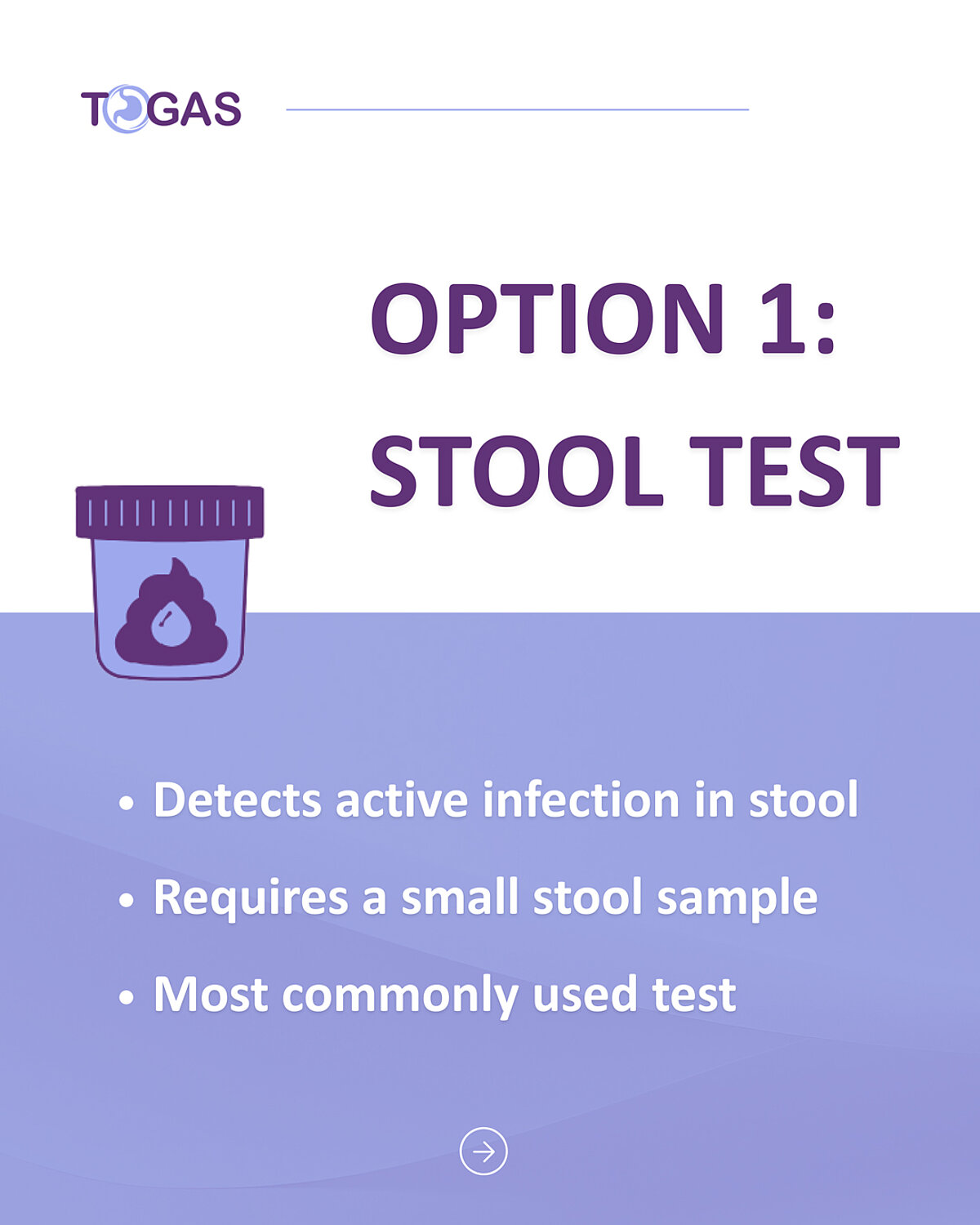
1. Stool Antigen Test
This is one of the most commonly used tests for H. pylori. It detects the presence of H. pylori antigens in your stool, indicating an active infection. You simply provide a small stool sample. This test is highly accurate and is often the first choice for diagnosing active infections.
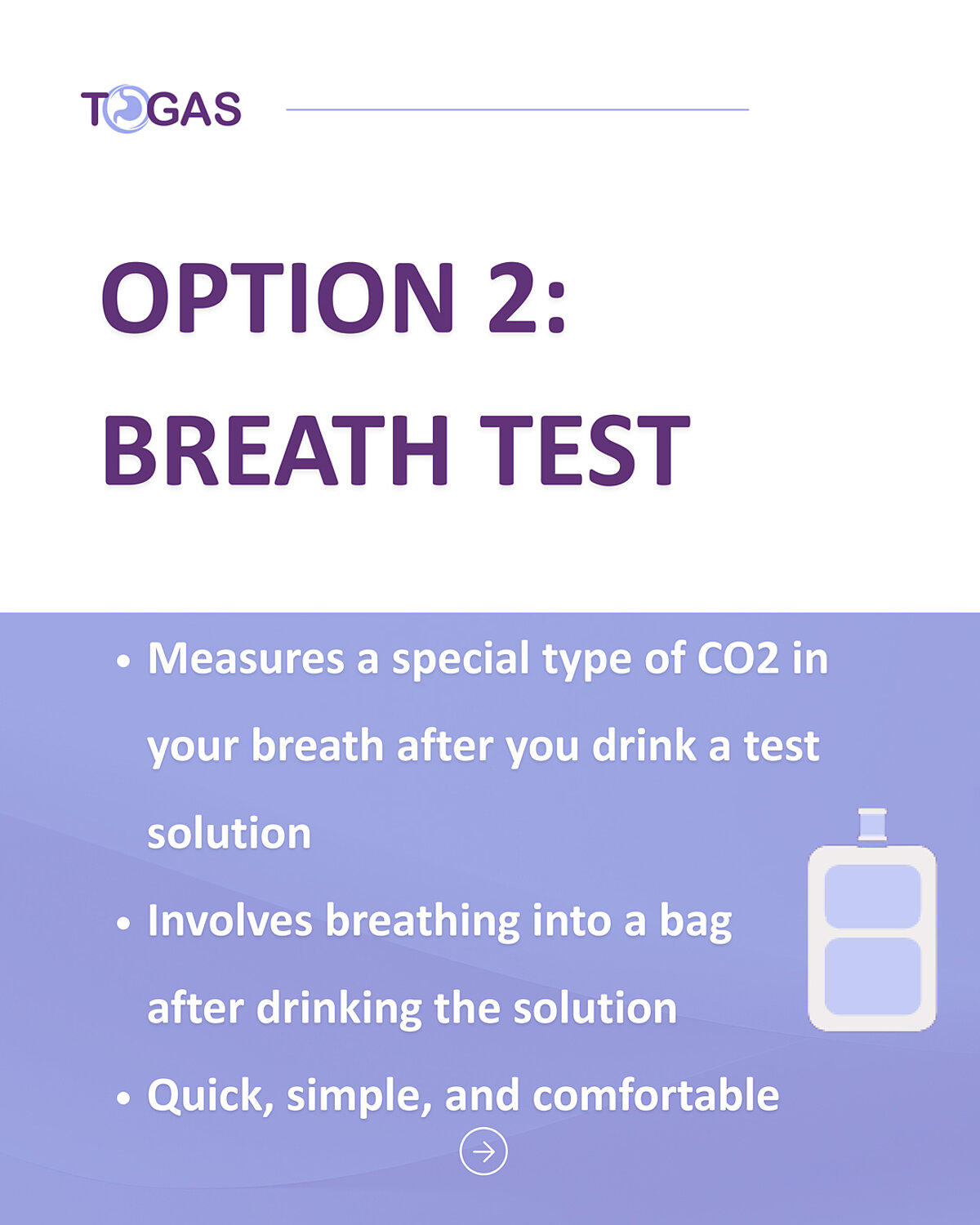
2. Urea Breath Test
This quick and comfortable test measures the amount of carbon dioxide in your breath. You'll drink a special solution containing urea, then breathe into a bag. If H. pylori is present in your stomach, it breaks down the urea, releasing CO2 that can be detected in your breath. The entire process takes about 30 minutes and is highly accurate for detecting active infections.
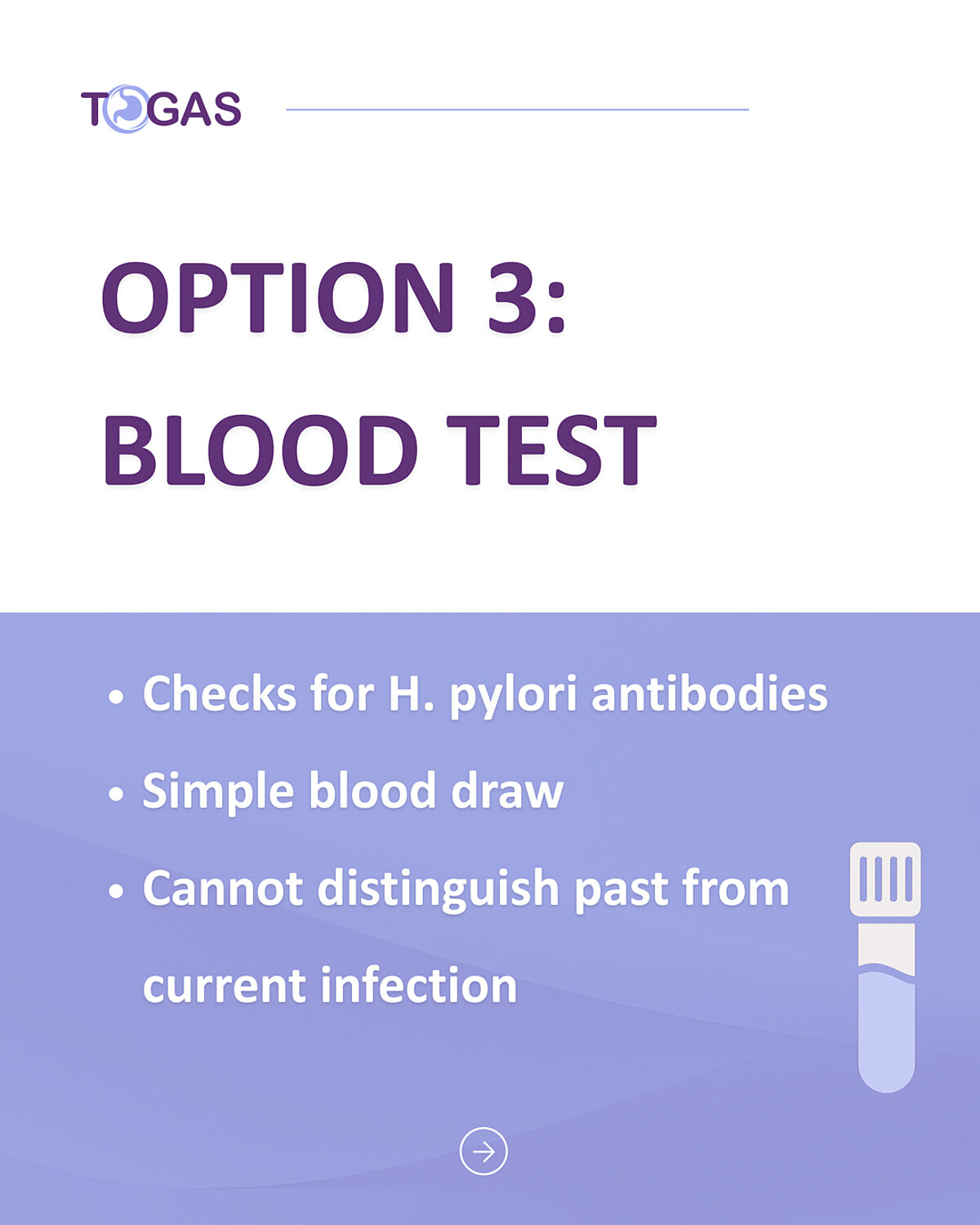
3. Blood Antibody Test
A simple blood draw checks for antibodies your body has produced in response to H. pylori. This is an easy test to perform, but it has some limitations. It cannot distinguish between a current infection and a past one that has already been treated. For this reason, it's less commonly used for initial diagnosis but may be helpful in certain situations.
Testing early and treating H. pylori infection reduces your risk of developing gastric cancer and prevents complications like ulcers and chronic gastritis.
Don't ignore persistent digestive symptoms and speak with your healthcare provider about which test is right for you.
